Author: Indic Warriors Editorial

  • The Forgotten History of India’s Maritime Past — Sanjeev Sanyal (Talk Summary)

    Talk summary · Speaker: Sanjeev Sanyal · Platform: Sangam Talks — summary written by Indic Warriors with full credit; watch the original below.

    In one line

    Indian history reads as a parade of land empires only because our textbooks face inland — turn the map toward the ocean and a five-thousand-year trading civilization comes into view.

    Five key points

    1. The textbook bias is continental. Standard histories run dynasty after dynasty from Pataliputra to Delhi; the coasts, where much of the wealth and contact actually flowed, barely appear.
    2. The maritime map redraws our neighbourhood. Seen from the sea, India’s neighbours are Oman on one side and Indonesia — even Vietnam — on the other: the real ecosystem of our trade, religion, and migration.
    3. The coastline itself is historical. Sea levels have risen roughly a hundred metres since the Ice Age; ports, and perhaps whole coastal landscapes of early habitation, now lie underwater — the shoreline is an archive we have barely opened.
    4. Trade carried civilization outward. From Harappan contacts with Mesopotamia to the temple networks of Southeast Asia, the ocean — not conquest — was the tradition’s great highway.
    5. This history has present-day stakes. A maritime self-understanding changes how India thinks about strategy, commerce, and belonging in the Indian Ocean world today.

    In the speaker’s words

    “India is one of the great maritime countries in the world through history.”

    “It is a living landscape, it is not a dead landscape.”

    Our note

    For our own shelf, the lesson is methodological: geography is a primary source. The same discipline that reads a coastline here reads a ghat or a temple plan in our History & Civilization section — and it is the eye we train on the Dakshin Bharat Temple Architecture Yatra, where the maritime temple corridor can be walked, not just read.

    Credits

    Watch the full talk: on YouTube (Sangam Talks channel).

    Speaker: Sanjeev Sanyal (economist, historian; author of The Ocean of Churn and Land of the Seven Rivers).
    Original talk: The Forgotten History of India’s Maritime Past — Sangam Talks. Watch the full talk there; this page is an independent summary published with full attribution. More episodes in our Podcasts & Channel section.
  • Review: The Beautiful Tree by Dharampal

    By Piyush Kukreti · Journal & E-Magazine — Book Review

    Some books argue; Dharampal’s The Beautiful Tree simply shows. Published in 1983, it is less a thesis than an act of retrieval: a collection of early British administrative surveys of indigenous Indian education — Madras Presidency, Bengal, Punjab, Bombay — reproduced at length and allowed to speak. What they say dismantles, in the administrators’ own handwriting, the belief that mass education arrived in India with the colonial state.

    The surveys Dharampal unearthed — above all the Madras Presidency returns of the 1820s and Adam’s reports on Bengal and Bihar — describe a dense web of village schools: one in nearly every sizeable village, teaching reading, writing, arithmetic, and often much more. The famous exchanges around Thomas Munro’s minute suggest school attendance proportions that compared respectably with England of the same decades. More uncomfortably for later assumptions, the rolls record substantial numbers of students from communities the colonial and post-colonial imagination has assumed were always excluded from letters.

    Three things make the book durable. First, its method: Dharampal was not a professional historian but a Gandhian archivist with monastic patience, and his refusal to paraphrase — the documents are reprinted, not summarized — makes the book almost impossible to dismiss. You are not asked to trust him; you are asked to read the East India Company’s own officers. Second, its title, which is Gandhi’s: speaking at Chatham House in 1931, Gandhi said the British had left India more illiterate than they found it, for they had dug up the beautiful tree of indigenous education and given nothing comparable in its place. The book is the footnote that speech never had. Third, its restraint. Dharampal does not romanticise the village school; he documents its curriculum, its fees, its social range, and lets the reader weigh what was lost when a fiscal order that had sustained it was dismantled.

    Read critically, the book still invites questions the serious student should keep open: survey coverage varied by presidency, definitions of “school” were elastic, and the comparison with England can be pushed too hard in both directions. But these are questions the book itself equips you to ask — which is exactly what a primary-source collection is for.

    For the parent or teacher reading it today, the takeaway is not nostalgia. It is a standard: education that was local, accountable to its community, and cheap enough to be universal was once an Indian norm. Whatever we build next in Indian education has to be measured against that memory, not against the assumption that the alternative to the present system was nothing.

    Who should read it: anyone teaching, funding, or rethinking Indian education; readers of our Education & Parenting shelf; and every student who has been told literacy came ashore with the colonizer.

    Credits: Review by Piyush Kukreti for Indic Warriors. Book: Dharampal, The Beautiful Tree: Indigenous Indian Education in the Eighteenth Century (1983; collected in Dharampal’s Collected Writings, Other India Press).

  • The Ghats of Kashi — A First Album

    The Ghats of Kashi — A First Album

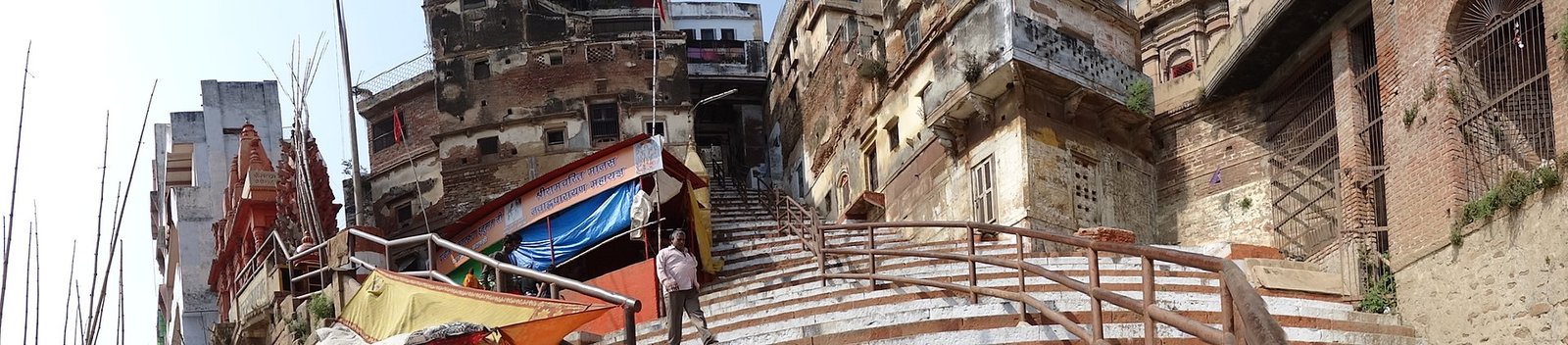
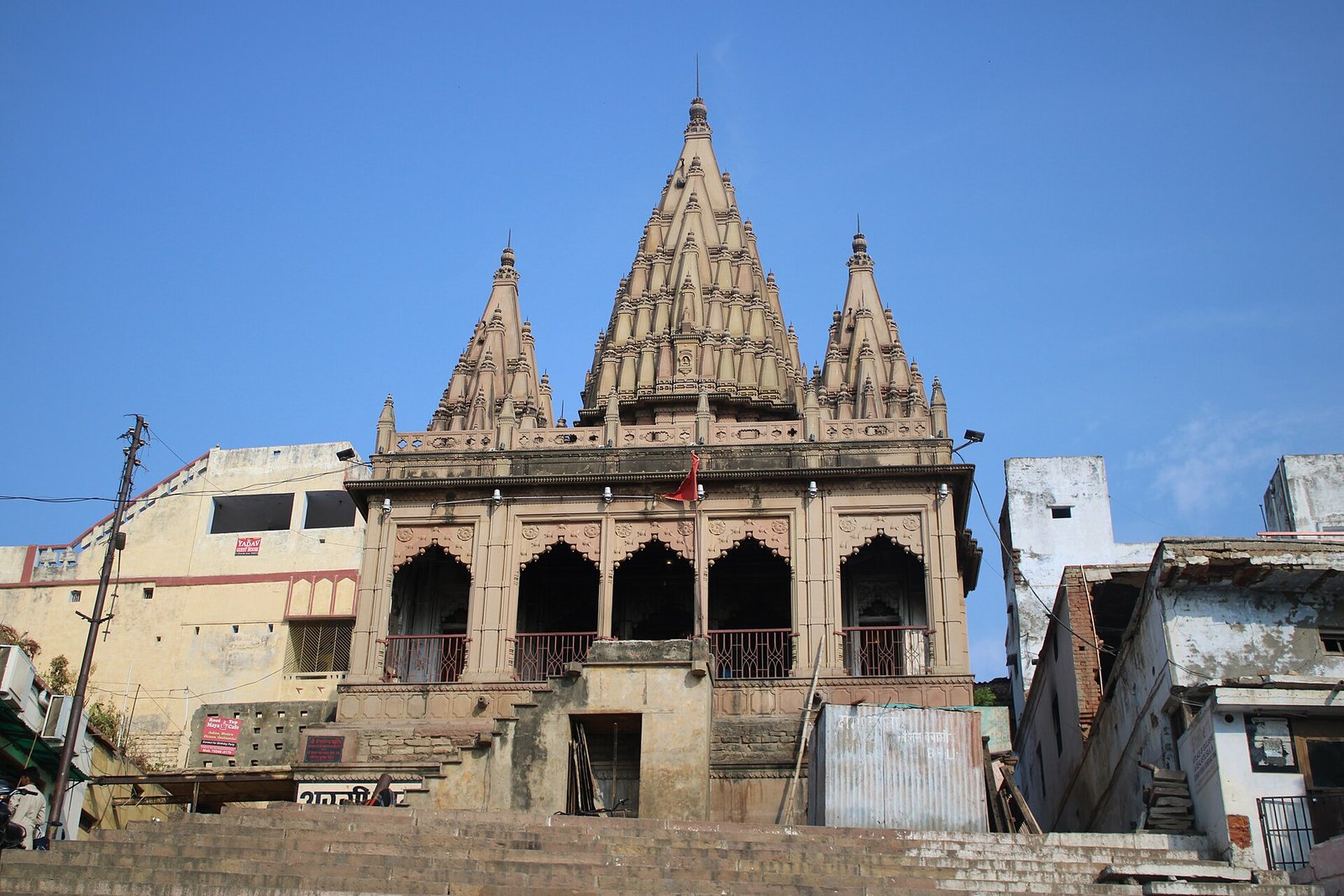
    Every album in the Indic Gallery is a field record: real places, walked and documented. This first album walks the ghats of Kashi — the river-facing stone steps that are the city’s true public architecture, where scholarship, ritual, commerce, and death have shared the same waterfront for centuries.

    The ghats of Kashi at dawn
    The ghats at dawn: an unbroken crescent of stone along the Ganga — Photo: Adam Jones from Kelowna, BC, Canada · CC BY-SA 2.0 · via Wikimedia Commons
    Assi Ghat, Varanasi
    Assi Ghat — the southern gateway, and our own neighbourhood ground — Photo: Akshay8090 · CC BY-SA 4.0 · via Wikimedia Commons
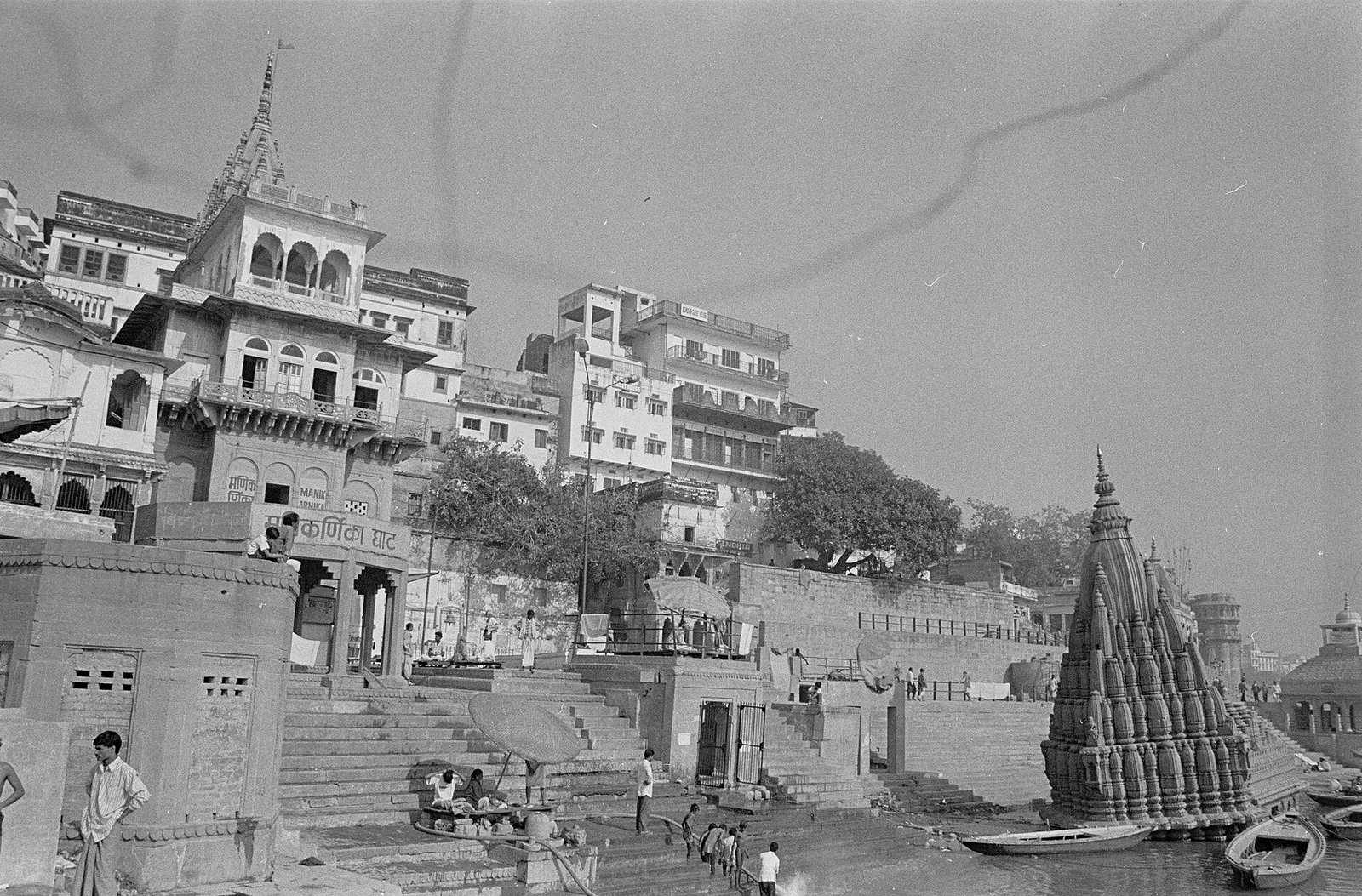
    Manikarnika Ghat, Varanasi
    Manikarnika — the ghat the Kashi Khanda calls the fire that never sleeps — Photo: sunoochi from Sapporo, Hokkaido, Japan · CC BY 2.0 · via Wikimedia Commons
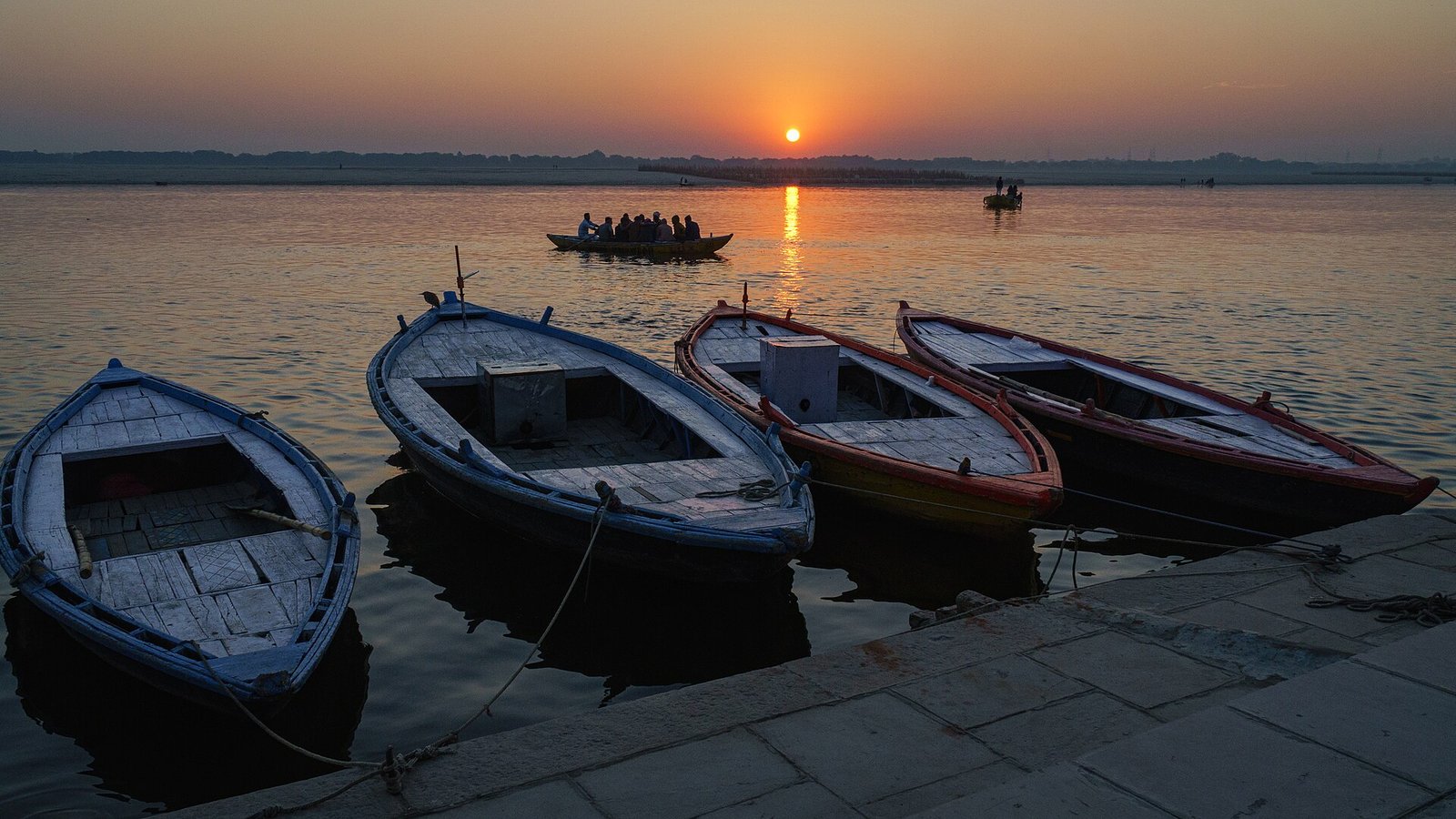
    Boats on the Ganga at Varanasi
    The river’s working life: boats that have ferried pilgrims for generations — Photo: Schwiki · CC BY-SA 4.0 · via Wikimedia Commons
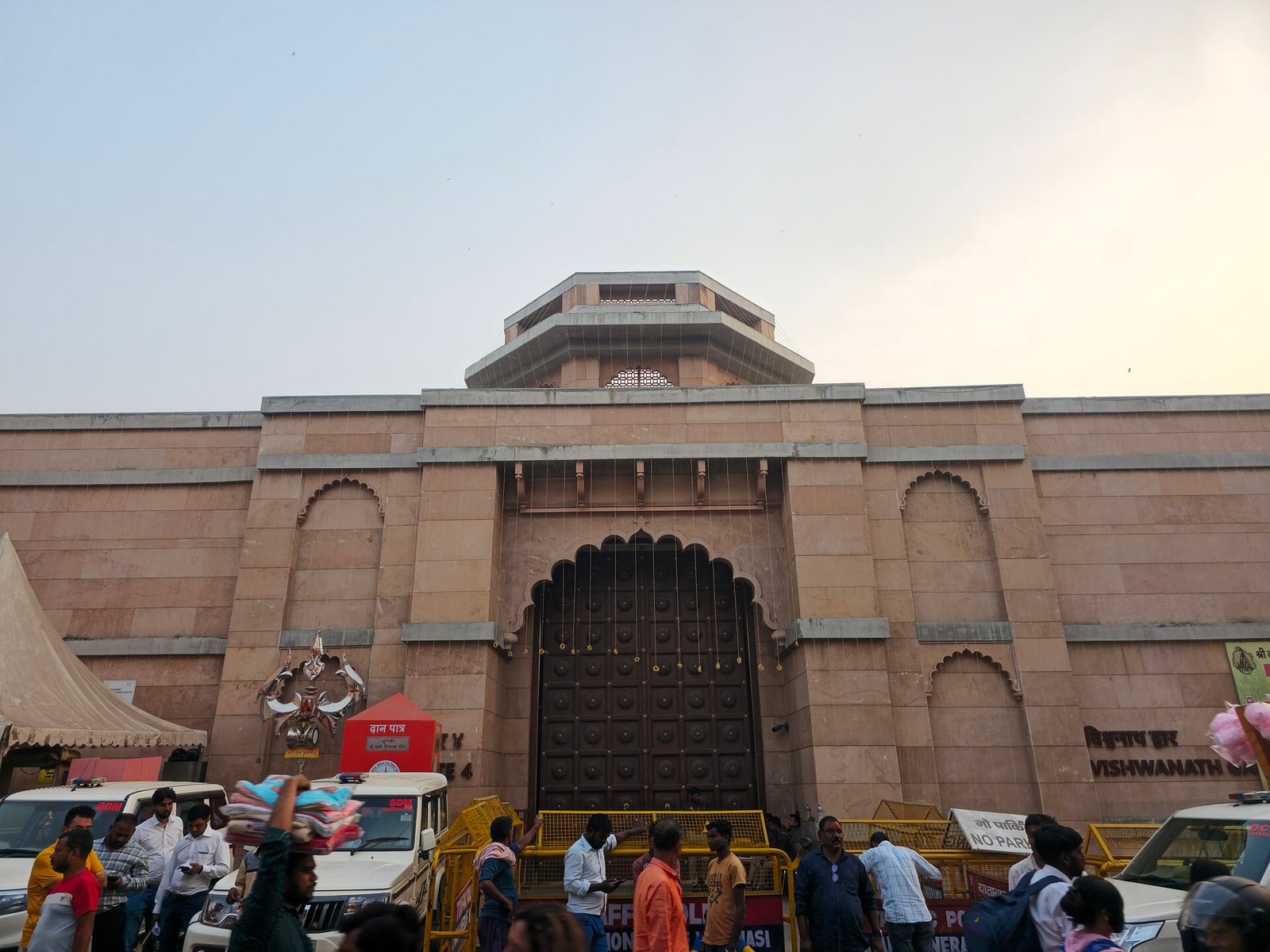
    Kashi Vishwanath temple, Varanasi
    Kashi Vishwanath — the axis the whole crescent turns around — Photo: Gannu03 · CC BY-SA 4.0 · via Wikimedia Commons

    Explore more albums in the Indic Gallery, and walk these ghats with us on the Kashi & Prayagraj Heritage Yatra.

    Credits: photographs via Wikimedia Commons under their stated licenses (per-image credit in captions); curation by Indic Warriors.