Author: Indic Warriors Editorial

  • Flight of Deities and Rebirth of Temples by Meenakshi Jain

    Indic Books — entry · Journal & E-Magazine — Book Review

    Histories of temple destruction usually end at the rubble. Meenakshi Jain’s Flight of Deities and Rebirth of Temples (Aryan Books International, 2019) begins there — and follows what happened next: priests spiriting images away by night, murtis buried in fields or sunk in tanks and wells against a better day, communities keeping the memory of a hiding place alive for generations, and consecrations performed again when the danger passed.

    Jain works the way she always works: by accumulation of primary evidence — inscriptions, temple chronicles, colonial gazetteers, archaeological reports — arranged region by region until the pattern becomes undeniable. The ‘flight of deities’ emerges not as scattered anecdote but as a pan-Indian devotional practice: an organized, risk-laden discipline of preservation that the standard narratives of passive loss simply cannot accommodate.

    The book’s quiet argument is about agency. A tradition that hid its gods, carried them across rivers, and rebuilt around them — sometimes after centuries — was never merely a victim of its history. It was, all along, the keeper of its own continuity. For readers following today’s reconsecrations, the book supplies the long context in which they belong.

    Who should read it: anyone studying temple heritage seriously — alongside our Temple, Art & Heritage shelf and the Temple Architecture Yatra, where this history stands in stone. Browse more titles on the Indic Books shelf.

    Credits: entry by Indic Warriors. Book: Meenakshi Jain, Flight of Deities and Rebirth of Temples: Episodes from Indian History (Aryan Books International, 2019).
  • How I Became a Hindu by Sita Ram Goel

    Indic Books — entry · Journal & E-Magazine — Book Review

    Most conversion stories move toward a new faith; Sita Ram Goel’s moves toward clarity. How I Became a Hindu (Voice of India) is the autobiography of one of independent India’s most formidable polemical minds — and its power lies in how little it asks the reader to take on trust.

    Goel begins where much of his generation began: a brilliant student in 1940s Calcutta, persuaded that Marxism was simply what intelligence looked like. The book’s early chapters reconstruct that certainty from the inside — the moral seriousness of it, the intellectual glamour — which is precisely what makes the later unravelling credible. The turn comes not through mysticism but through evidence: the realities of communist practice, and the patient influence of his friend and lifelong collaborator Ram Swarup, who kept asking the questions the ideology could not survive.

    What Goel returns to is not a ritual identity but a civilizational one: dharma as a framework spacious enough to hold inquiry, plural enough to refuse totalitarian answers, and old enough to have seen every ‘new’ idea before. The closing chapters, where he weighs what Hindu society must relearn about defending itself intellectually, read as the founding notes of the publishing project — Voice of India — that would occupy the rest of his life.

    Who should read it: every student who suspects that the ideas they have inherited about India were someone else’s conclusions; readers of our Dharma & Philosophy shelf; and anyone tracing how the modern Indic intellectual resurgence began. Browse more titles on the Indic Books shelf.

    Credits: entry by Indic Warriors. Book: Sita Ram Goel, How I Became a Hindu (Voice of India; expanded edition 1993).

  • Annual Indic Warriors Conclave 2026 — Varanasi

    The first Annual Indic Warriors Conclave · Varanasi · 2026

    This year we hold our first annual gathering — the Conclave that every future year will build on. Two sittings, one city:

    Programme

    • Varanasi Heritage Forums — 28–30 September 2026, Assi Ghat Convocation Hall: three days of forums on the living heritage of Kashi with our institutional network.
    • IKS Pedagogy Workshops — 1–2 October 2026, BHU Guest House Auditorium: hands-on workshops for teachers, continuing the FDP line of work.

    Participation

    Seats are reserved for members first. Membership is free — register here — and the registration desk opens with the final programme. Details and any changes will be updated on this page and on the Annual Meet page.

    Draft note: this is the baseline announcement for our first-ever conclave; speakers, session titles, and registration windows land here as they are confirmed.

  • Decolonizing Scepticism & Self-Doubt — Live Webinar

    Live webinar · Speaker: Dr. Bhanumati Mishra (Founder & Academic Counsellor, Indic Warriors)

    Status: Upcoming — date to be announced. Time: TBA (IST). Mode: Online (link shared with registered members).

    About this session

    Scepticism is healthy; self-doubt that has been trained into a civilization is not. This session separates the two: how colonial-era framing turned inherited knowledge into a source of embarrassment, and how a student can rebuild confident, critical engagement with the tradition — without abandoning rigour.

    You will leave with

    • A working distinction between critical method and inherited self-doubt
    • Three habits for reading Indic sources with confidence and care
    • A reading list to continue with

    Register

    Registration is through free membership — the site’s Register button is the single joining mechanism. Register free · questions on WhatsApp.

    Template note (draft): date, time, and add-to-calendar links are filled at scheduling; on completion this page flips to “Recording” state with the video and resources. See more sessions at Webinars & Workshops.

  • Analyzing Leftist Historiography on Temple Architectures

    By Dr. Rohit Tiwari · Journal & E-Magazine — Critical Analysis

    Every historiography selects. The question this essay asks of the dominant academic writing on Indian temple architecture is not whether it selects, but what its selections systematically leave out — and what a fuller method would restore.

    Three habits recur in the influential literature. First, the temple is treated primarily as a statement of royal power: an inscription in stone about kings, legitimation, and surplus extraction. The Chola temples become Chola propaganda; the shrine’s function as a living instrument of worship — the reason it was built and the reason it survives — recedes to a footnote. Second, the shastra literature that governed the buildings — the Agamas, the Mayamata, the Manasara — is read as post-hoc rationalisation rather than as the working manuals the sthapatis actually used; the tradition’s own theory is denied standing as theory. Third, destruction and discontinuity are smoothed: the fate of temples under iconoclasm is either minimised or aggregated into passive-voice abstractions in which buildings “fell into disuse.”

    The corrective is not a counter-polemic; it is method. (1) Take the ritual function seriously: a structure whose plan, elevation, and iconographic programme are all specified by a liturgical text should be analysed liturgically first and politically second — as scholars of European cathedrals do without embarrassment. (2) Read the shilpa-shastras as engineering and theology at once, with the buildings as their evidence; the fit between the Mayamata’s prescriptions and the standing monuments is itself a historical datum. (3) Count honestly: epigraphy, travellers’ accounts, and the archaeology of reused material allow the history of temple destruction and renewal to be written with numbers instead of adjectives, in both directions.

    None of this requires abandoning the real insights of the political-economy school — temples were economic institutions, and saying so is not defamation. It requires only symmetry: the same critical distance toward the historian’s framework as toward the tradition’s. A historiography that grants the temple its own categories will, paradoxically, be better history by the academy’s own standards — more evidence, fewer assumptions.

    Credits: Dr. Rohit Tiwari for Indic Warriors. Related shelf: Literature & Books and the Dakshin Bharat Temple Architecture Yatra.

  • Upanishadic Epistemology & Modern Science

    By Vidisha Chitravanshi · Journal & E-Magazine — Research Paper

    What can a three-thousand-year-old dialogue about the self say to a physics that measures qubits? The honest answer — and this paper’s argument — is: something real, provided we let each discipline keep its own instruments.

    The Upanishads are not proto-physics. They are a sustained first-person investigation of consciousness — of the knower rather than the known. The Brihadaranyaka’s “neti, neti” is a method: strip every object from awareness and examine what cannot be stripped. The Taittiriya’s five-sheath analysis (annamaya to anandamaya) is a layered model of the person; the Mandukya’s four states — waking, dream, deep sleep, turiya — is as precise a phenomenology of consciousness as any tradition has produced. These are epistemological instruments, refined across generations of teacher-student lineages, and they anticipate a question modern science has only recently allowed itself to ask seriously: what is the observer?

    Modern science’s own crisis of the observer — measurement in quantum mechanics, the “hard problem” in philosophy of mind — does not prove the Upanishads right. Claiming so cheapens both sides. What it does is reopen a question the Upanishads never closed: whether consciousness is derivative of matter or prior to the categories through which matter is known. Vedantic epistemology, with its taxonomy of pramanas — perception, inference, and testimony as distinct, criticizable means of knowledge — offers a discipline for even asking such questions without confusion.

    The productive programme, then, is not “quantum consciousness” slogans but methodological: (1) treat the Upanishadic corpus as a data-rich phenomenology of first-person states, the way contemplative science already treats meditation reports; (2) use its pramana framework to keep claims sorted by the kind of evidence that can support them; (3) let the traditions’ contemplative technologies — dhyana, self-enquiry — be studied with the same rigour as any laboratory protocol, as researchers in contemplative neuroscience have begun to do.

    The Upanishads end their greatest dialogues not with an answer but with a silence that is itself instruction. Science at its best knows that posture. Between the two lies not a merger but a conversation — and India, which owns one side of it natively, should be leading that conversation rather than importing it.

    Credits: Vidisha Chitravanshi for Indic Warriors. Primary texts: Brihadaranyaka, Taittiriya, Mandukya Upanishads (with Shankara’s commentaries). Related reading in Indian Knowledge Systems.

  • Dating of the Ramayana and Mahabharata — Nilesh Oak (Talk Summary)

    Talk summary · Speaker: Nilesh Nilkanth Oak · Platform: Sangam Talks — independent summary with full credit.

    In one line

    Oak treats the epics’ own sky descriptions — planetary positions, seasonal markers, eclipse sequences — as testable data, and argues astronomy can date the events of the Mahabharata and Ramayana far earlier than textbook chronologies allow.

    Five key points

    1. The method invites falsification. Oak frames the whole exercise as hypothesis testing: put every astronomical reference on the table, and let any single irreconcilable observation break the proposed date.
    2. The texts carry sky-data in bulk — hundreds of astronomical references in the Mahabharata alone, far too many, he argues, to dismiss as poetic decoration.
    3. Simulation is the instrument: modern planetarium software lets those references be replayed against the actual ancient sky.
    4. The stakes are chronological: if the observations hold, the epics’ events precede the dates our textbooks assign to “early India” by millennia.
    5. Questions are the culture: Oak opens by building, in his words, a framework for the audience to interrogate the method — samvad as pedagogy.

    In the speaker’s words

    “…create a framework for you to ask questions.”

    Our note

    Archaeoastronomy is contested ground, and serious critics exist; our shelf’s standard is to present the method, the evidence, and the objections together. This summary is the door — the debate lives in our Sacred Texts & Epics category as it grows.

    Credits

    Watch the full talk: on YouTube (Sangam Talks channel).

    Speaker: Nilesh Nilkanth Oak, author of When Did the Mahabharata War Happen?
    Original talk: Dating of the Ramayana and Mahabharata — Sangam Talks. Independent summary with full attribution; watch the complete talk at the source.

  • Indian Civilization: The Untold Story — Raj Vedam (Talk Summary)

    Talk summary · Speaker: Dr. Raj Vedam · Platform: Sangam Talks — independent summary with full credit; watch the original below.

    In one line

    India’s antiquity and its role as a knowledge producer are systematically understated, Vedam argues, because the frameworks we inherited were built to discredit Indic sources — and only a method-level critique can correct the record.

    Five key points

    1. The paradoxes come first. An ancient civilization positioned as young; a knowledge producer positioned as a borrower; rich Indic sources treated as myth while thinner external sources are treated as history.
    2. The root is colonial Indology. Nineteenth-century frameworks — built around biblical chronologies and racial theories — set dates and narratives that still structure textbooks.
    3. A curious boundary: mainstream accounts allow Indian influence to travel east to China, Korea, and Japan, yet stop it — Vedam notes the irony — at Afghanistan going west.
    4. Method is the battleground. Vedam’s case rests on interdisciplinary evidence — astronomy, genetics, archaeology, and the Indic textual record read on its own terms — checked against each other rather than against inherited assumptions.
    5. The remedy is validation infrastructure: Indian institutions doing primary research on Indic sources, rather than outsourcing the narrative.

    In the speaker’s words

    “We have been knowledge producers but we are positioned otherwise.”

    “We need a critique of methods and some mechanism to validate the narratives.”

    Our note

    Whatever position one takes on specific datings, the methodological demand — read the Indic sources as evidence, and test the frameworks themselves — is the working standard of our History & Civilization shelf.

    Credits

    Watch the full talk: on YouTube (Sangam Talks channel).

    Speaker: Dr. Raj Vedam (Indian History Awareness and Research).
    Original talk: Indian Civilization: The Untold Story — Sangam Talks. This page is an independent summary published with full attribution; watch the complete talk at the source. More in our Podcasts & Channel.

  • Heritage Walk: Sarnath & Ramnagar

    Heritage Walk: Sarnath & Ramnagar

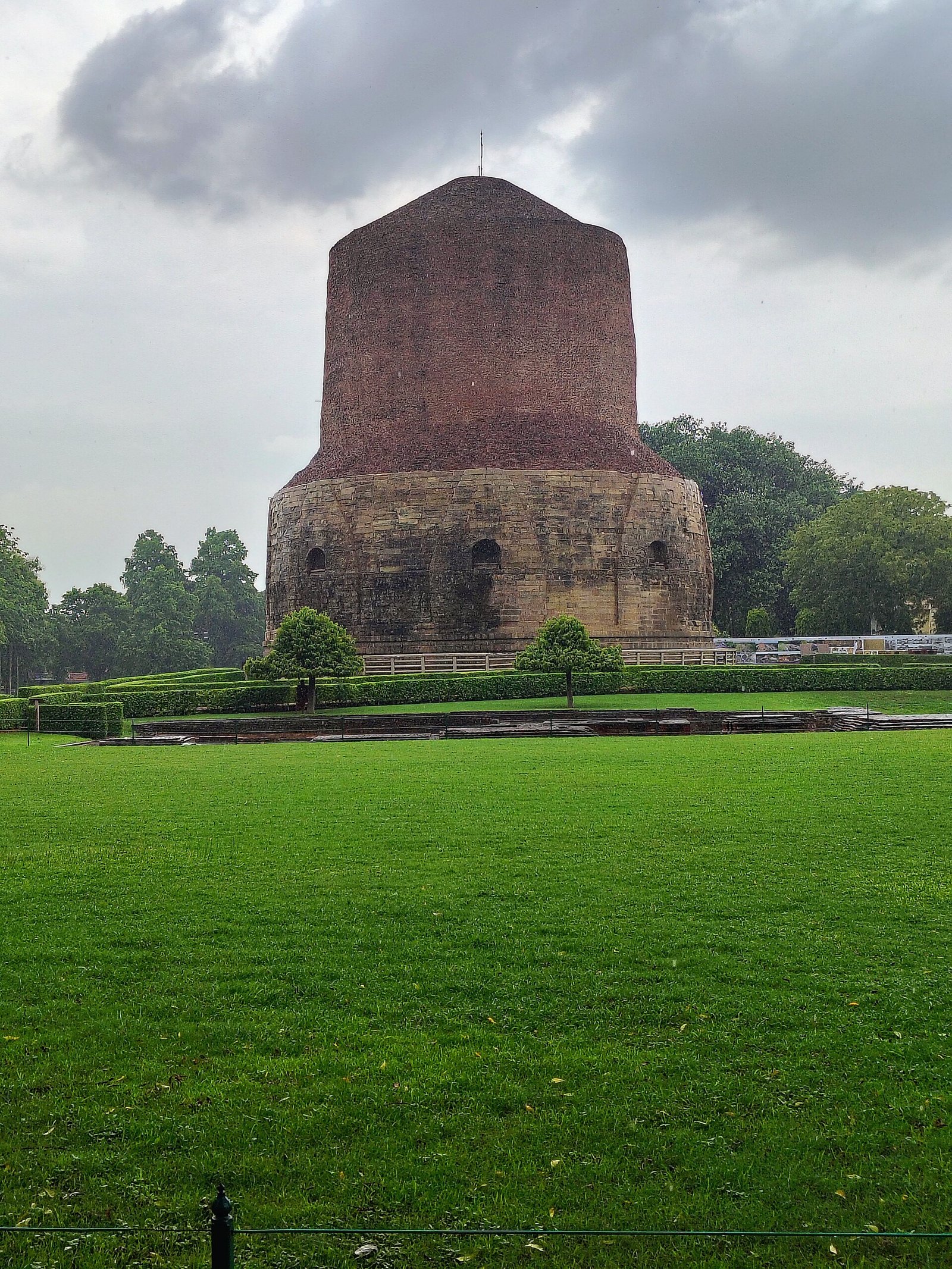
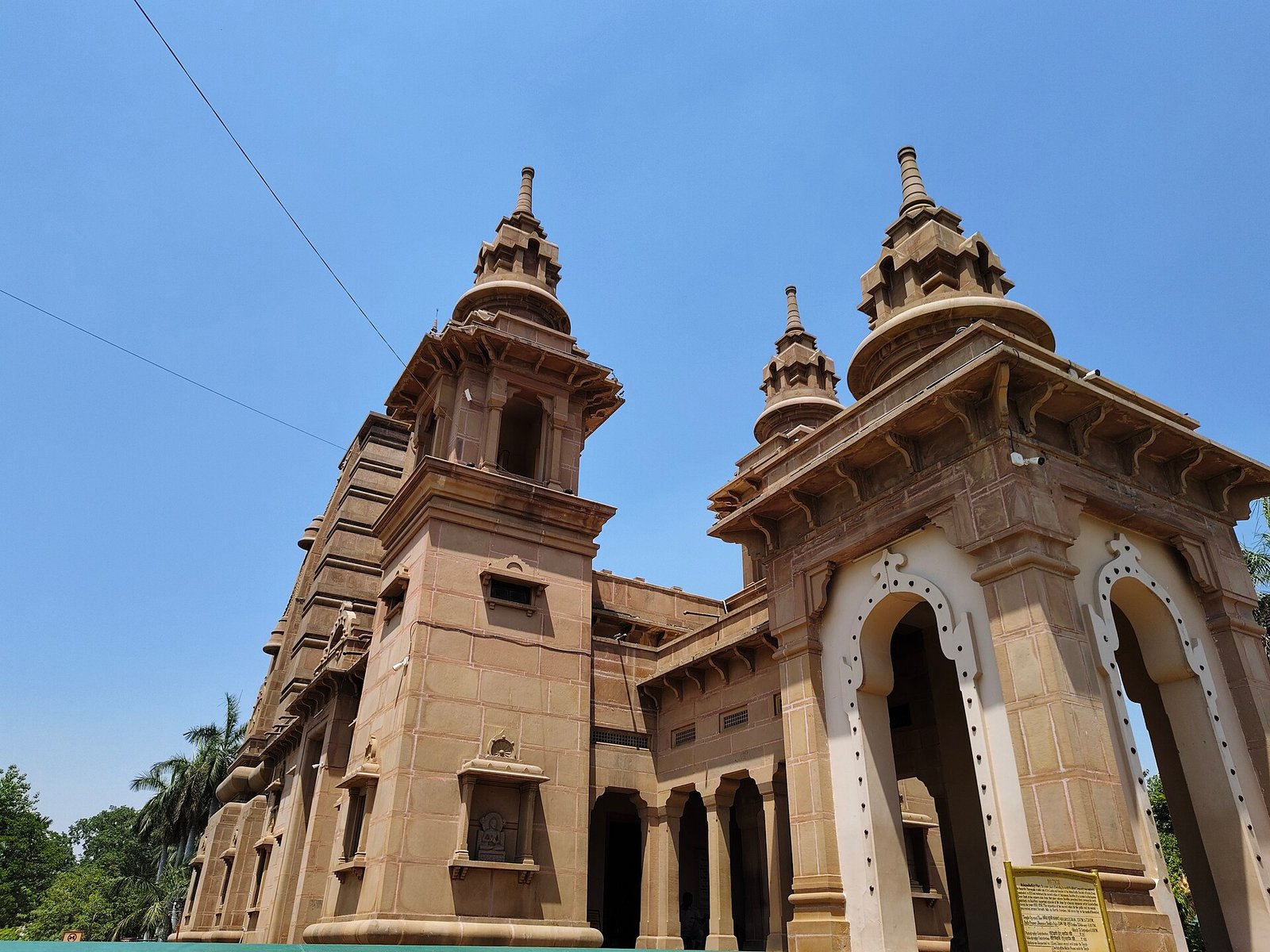
    Across the river and beyond the city: at Sarnath the Dhamma was first taught; at Ramnagar the fort still keeps the world’s oldest continuously staged Ramlila. One heritage walk, two worlds.

    The Dhamek Stupa, Sarnath
    The Dhamek Stupa — marking where the first sermon was preached — Photo: Hardy Explorer · CC0 · via Wikimedia Commons
    Mulagandha Kuti Vihara, Sarnath
    Mulagandha Kuti Vihara — the modern vihara amid the old monastery field — Photo: Aliva Sahoo · CC BY-SA 3.0 · via Wikimedia Commons
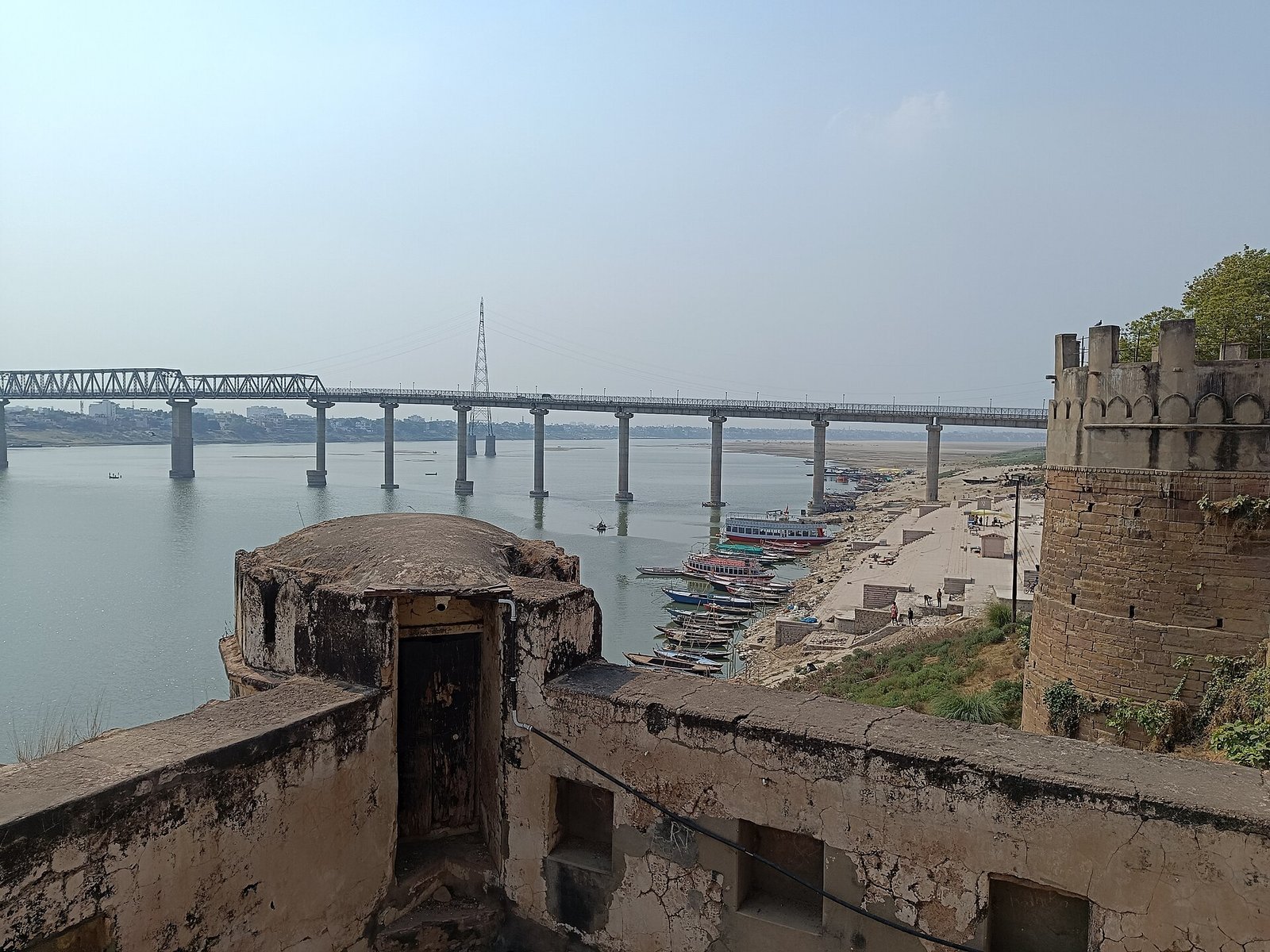
    Ramnagar Fort across the Ganga
    Ramnagar Fort — the Kashi Naresh’s seat across the Ganga — Photo: K.Venkataramana · CC0 · via Wikimedia Commons

    More walks in the Indic Gallery · join one on the Kashi & Prayagraj Heritage Yatra.

    Credits: photographs via Wikimedia Commons under their stated licenses; curation by Indic Warriors.

  • Kashi Temple Architecture Mapping

    Kashi Temple Architecture Mapping

    Kashi absorbs its temples the way a forest absorbs trees: into lanes, courtyards, and walls. This album begins our mapping of the city’s temple fabric — the named landmarks first, the lane shrines to follow.

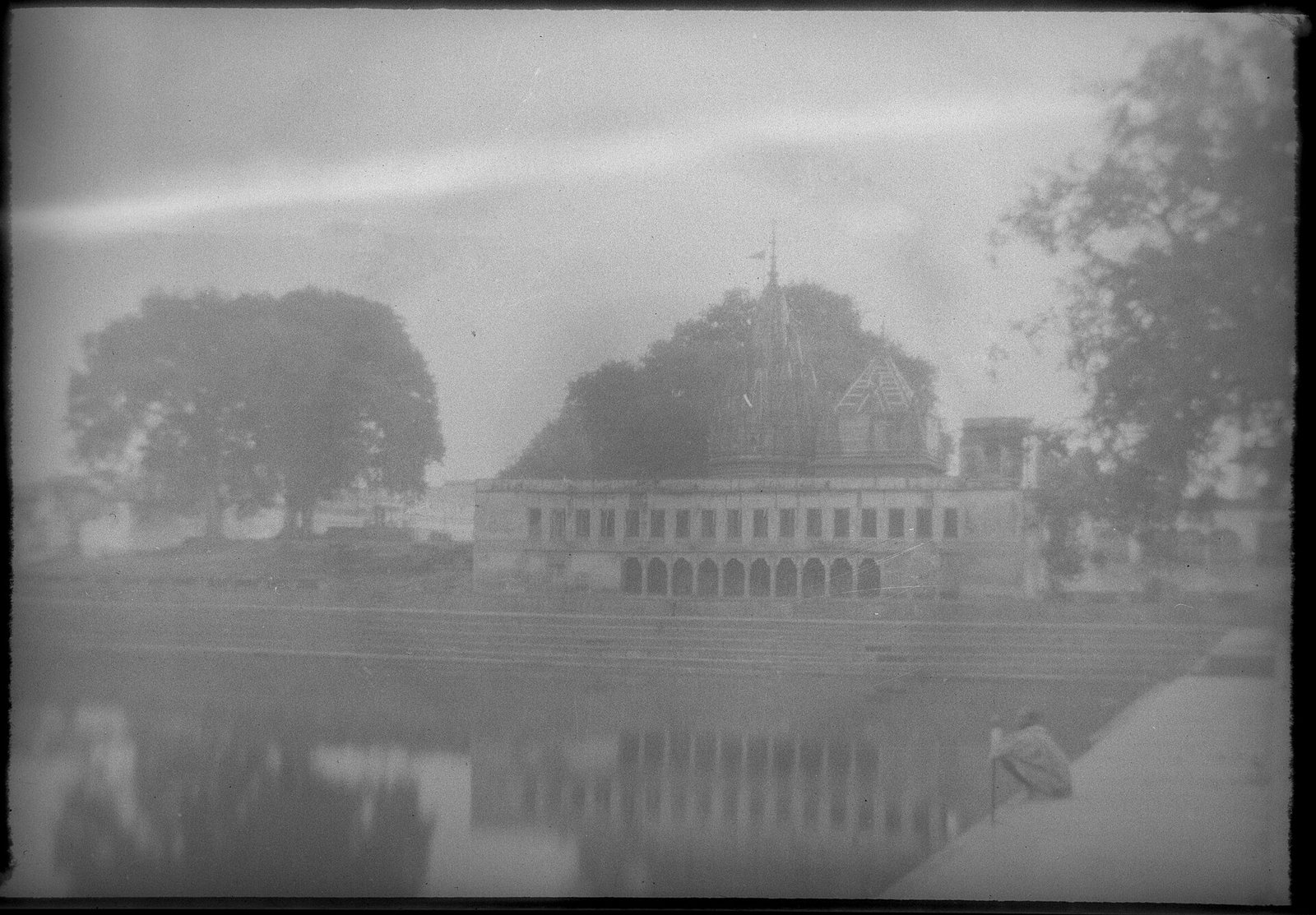
    Durga Kund temple, Varanasi
    Durga Kund — the 18th-century shikhara over its stepped kund — Photo: Creator:Agnes Morgenstierne · Public domain · via Wikimedia Commons
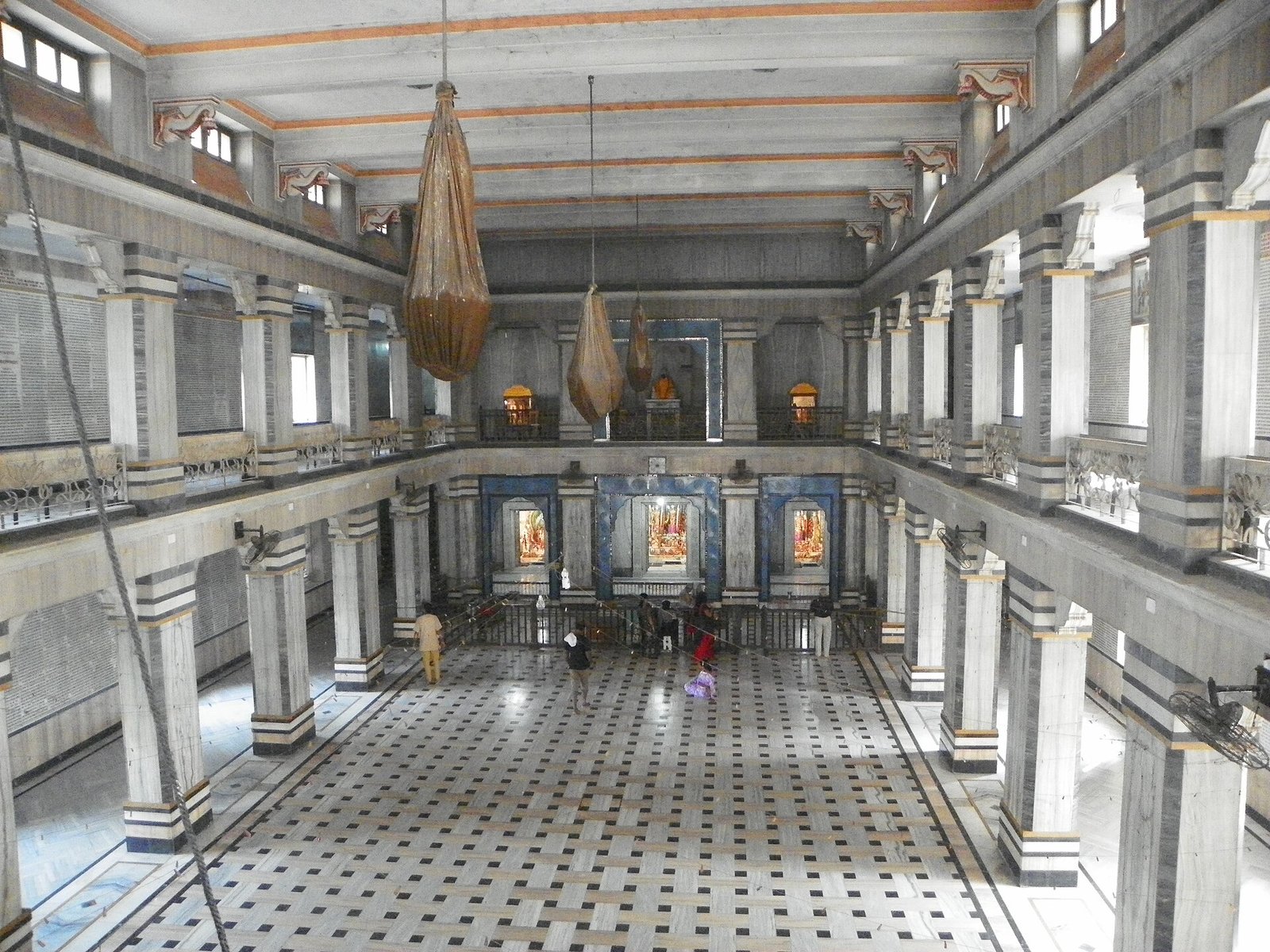
    Tulsi Manas Mandir, Varanasi
    Tulsi Manas Mandir — where the Ramcharitmanas lines the walls — Photo: juggadery · CC BY-SA 2.0 · via Wikimedia Commons
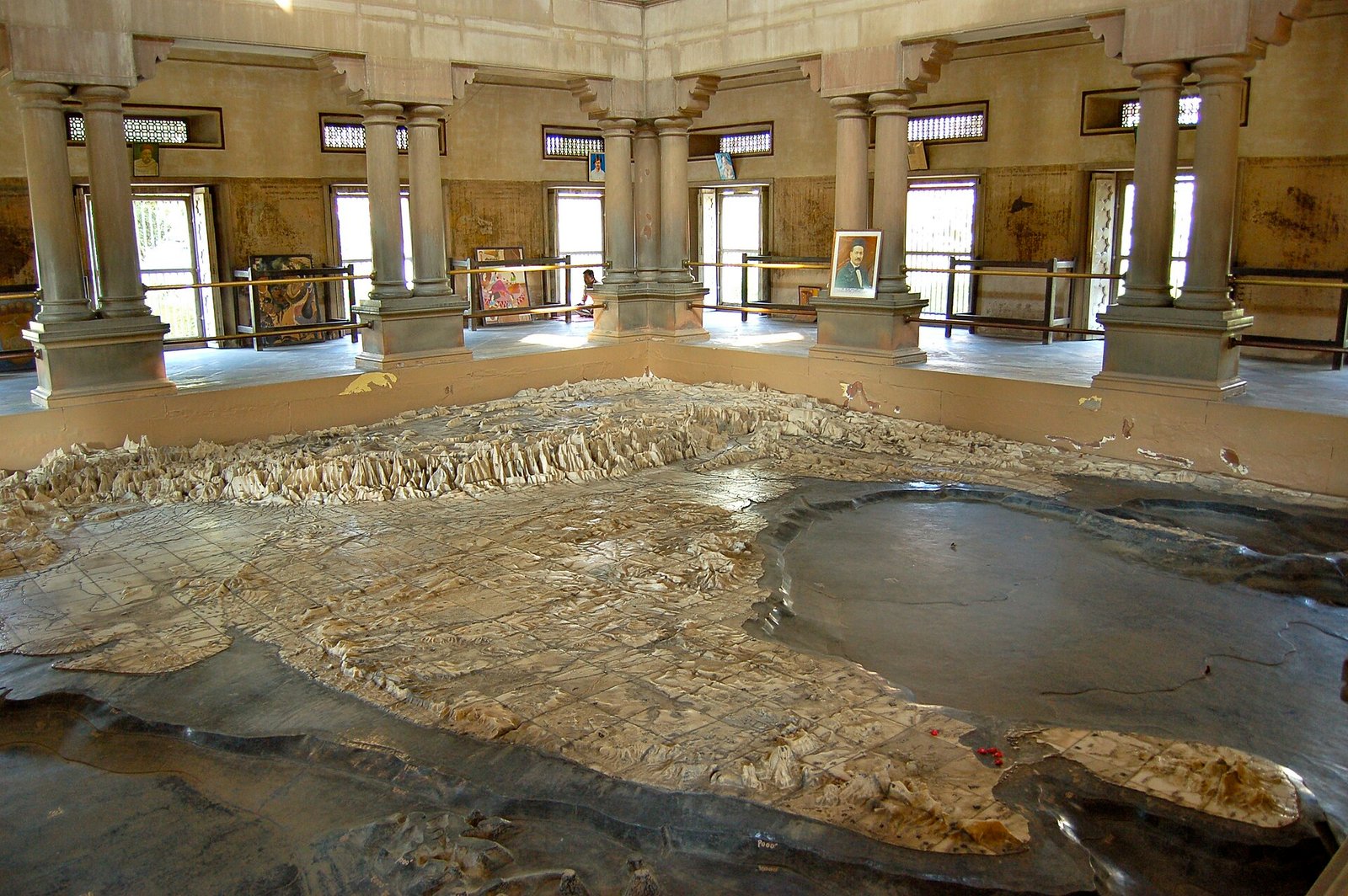
    Bharat Mata Mandir, Varanasi
    Bharat Mata Mandir — the temple whose deity is the map of India — Photo: Manuel Menal · CC BY-SA 2.0 · via Wikimedia Commons

    Follow the mapping in the Indic Gallery and read the architecture itself on the Temple Architecture Yatra.

    Credits: photographs via Wikimedia Commons under their stated licenses (per-image credits in captions); curation by Indic Warriors.