Category: Temple, Art & Heritage

Temple architecture and management, iconography, heritage reclamation

  • Reading a Temple: Vimana, Gopuram, Garbhagriha

    By the Indic Warriors editorial team · Members’ guide · Temple, Art & Heritage

    Stand before any great Indian temple and you are being spoken to in a precise, ancient language — one most of us were never taught to read. The tower is a sentence about cosmology; the doorway is a sentence about thresholds; even the plan under your feet is a diagram of the universe with you walking through it. This guide — the first in our members’ series — teaches the grammar, so that your next temple visit becomes an act of reading.

    It is written for the traveller, not the specialist: no prerequisites beyond curiosity, every Sanskrit term explained at first use, and everything keyed to what you can actually see standing on site — the way we teach it on the Temple Architecture Yatra.

    Begin at the centre: the garbhagriha

    Every temple grows outward from one small, dark, windowless chamber — the garbhagriha, the womb-house. Architecturally it is almost always the simplest room in the complex; theologically it is the reason everything else exists. The murti consecrated here is not a statue in the museum sense but an enlivened presence, and the entire building is best understood as the architecture of approach: a sequence of thresholds preparing you for that single meeting.

    The vertical sentence: vimana and shikhara

    Directly above the sanctum rises the temple’s central tower — called the vimana in the southern (Dravida) grammar, crowned by a shikhara; in the northern (Nagara) grammar the whole curving tower is the shikhara. The tower is a mountain: Meru, the cosmic axis, rendered in stone tiers. Learn to see the difference at a glance — the Dravida vimana steps upward in disciplined horizontal storeys, like a mountain built of mountains; the Nagara shikhara sweeps in one continuous curve. With that one distinction you can place most temples in India on the map before reading a single signboard.

    The gateway that outgrew the tower: gopuram

    In the mature southern tradition, the outer gateways — gopurams — grew taller than the sanctum tower itself: at Madurai they dominate the skyline while the sanctum stays humble. This is not confusion but theology: the threshold announces itself to the whole city, while holiness recedes inward toward smallness and darkness. A temple where the gate is grand and the core is quiet is telling you what the tradition thinks about pride and interiority.

    The horizontal sentence: mandapas and the axis

    Between gate and sanctum run the pillared halls — mandapas — for assembly, music, dance, and waiting. Notice how the light dims and the ceiling lowers as you walk inward: the architecture is regulating your attention, sequencing you from the crowd’s brightness to the sanctum’s held breath. The straight line from gateway through mandapas to garbhagriha is the temple’s plot line, and you are its protagonist.

    The rulebook: agamas and shilpa-shastra

    None of this is improvised. The Agamas prescribe how a temple must be built and served; treatises like the Mayamata and Manasara supply proportions, orientations, and iconographic programmes. When you see a perfectly proportioned doorway or a precisely placed dikpala, you are seeing a manual being obeyed across forty generations. This is why our historiography shelf insists the temple be read liturgically first and politically second — the argument is made in full here.

    Your field checklist

    Next visit: (1) find the axis and walk it slowly; (2) name the tower — vimana-with-storeys or curving shikhara; (3) compare gate to sanctum and ask what that ratio preaches; (4) count the thresholds you cross; (5) in the mandapa, look up — the ceiling panels are usually the least-noticed masterpieces in the building. Then come tell us what you read: this guide grows with the Temple, Art & Heritage shelf.

    Credits: Indic Warriors editorial team. Frames: Agamas; Mayamata; Manasara; field practice from the yatra programme.
  • #BringOurGodsHome — Vijay Kumar on Reclaiming India’s Stolen Deities (Talk Summary)

    Talk summary · Speaker: Vijay Kumar (India Pride Project) · Platform: Sangam Talks — independent summary with full credit.

    In one line

    A volunteer network armed with nothing more exotic than search engines, social media, and high-resolution photographs built the evidence chains that museums and governments could not ignore — and India’s looted deities began coming home.

    Five key points

    1. The scale is civilizational: deities, maps, and manuscripts smuggled out for decades — the Brihadeshwara complex’s stolen Nataraja standing for thousands of cases.
    2. The laundering route is corporate: handlers pick pieces in India; papers are forged abroad; auction houses sell; national museums buy in good faith. Theft ends its journey behind glass, respectable.
    3. The method is open-source seva: volunteers photograph suspect idols in Sydney or Berlin; matches are made against Indian archives; the paper trail is rebuilt in public.
    4. Restitution works: matched evidence has forced returns from national collections — proof that the question “can we really get them back?” has an answer.
    5. The deeper claim: a murti is not an artefact but a consecrated presence — which is why the campaign’s name says gods, not art.

    In the speaker’s words

    “Treasures have been looted for decades and centuries.”

    “But most importantly, can we really ever get them back?”

    Our note

    This campaign is heritage work at its most concrete, and it pairs with the scholarship: Meenakshi Jain’s Flight of Deities documents the older chapters of the same story — images hidden to survive, now images recovered to return. Both live on our Temple, Art & Heritage shelf.

    Credits

    Watch the full talk: on YouTube (Sangam Talks channel).
    Speaker: Vijay Kumar, co-founder, India Pride Project; author of The Idol Thief.
    Original talk: Sangam Talks. Independent summary, full attribution.

  • Flight of Deities and Rebirth of Temples by Meenakshi Jain

    Indic Books — entry · Journal & E-Magazine — Book Review

    Histories of temple destruction usually end at the rubble. Meenakshi Jain’s Flight of Deities and Rebirth of Temples (Aryan Books International, 2019) begins there — and follows what happened next: priests spiriting images away by night, murtis buried in fields or sunk in tanks and wells against a better day, communities keeping the memory of a hiding place alive for generations, and consecrations performed again when the danger passed.

    Jain works the way she always works: by accumulation of primary evidence — inscriptions, temple chronicles, colonial gazetteers, archaeological reports — arranged region by region until the pattern becomes undeniable. The ‘flight of deities’ emerges not as scattered anecdote but as a pan-Indian devotional practice: an organized, risk-laden discipline of preservation that the standard narratives of passive loss simply cannot accommodate.

    The book’s quiet argument is about agency. A tradition that hid its gods, carried them across rivers, and rebuilt around them — sometimes after centuries — was never merely a victim of its history. It was, all along, the keeper of its own continuity. For readers following today’s reconsecrations, the book supplies the long context in which they belong.

    Who should read it: anyone studying temple heritage seriously — alongside our Temple, Art & Heritage shelf and the Temple Architecture Yatra, where this history stands in stone. Browse more titles on the Indic Books shelf.

    Credits: entry by Indic Warriors. Book: Meenakshi Jain, Flight of Deities and Rebirth of Temples: Episodes from Indian History (Aryan Books International, 2019).

  • Analyzing Leftist Historiography on Temple Architectures

    By Dr. Rohit Tiwari · Journal & E-Magazine — Critical Analysis

    Every historiography selects. The question this essay asks of the dominant academic writing on Indian temple architecture is not whether it selects, but what its selections systematically leave out — and what a fuller method would restore.

    Three habits recur in the influential literature. First, the temple is treated primarily as a statement of royal power: an inscription in stone about kings, legitimation, and surplus extraction. The Chola temples become Chola propaganda; the shrine’s function as a living instrument of worship — the reason it was built and the reason it survives — recedes to a footnote. Second, the shastra literature that governed the buildings — the Agamas, the Mayamata, the Manasara — is read as post-hoc rationalisation rather than as the working manuals the sthapatis actually used; the tradition’s own theory is denied standing as theory. Third, destruction and discontinuity are smoothed: the fate of temples under iconoclasm is either minimised or aggregated into passive-voice abstractions in which buildings “fell into disuse.”

    The corrective is not a counter-polemic; it is method. (1) Take the ritual function seriously: a structure whose plan, elevation, and iconographic programme are all specified by a liturgical text should be analysed liturgically first and politically second — as scholars of European cathedrals do without embarrassment. (2) Read the shilpa-shastras as engineering and theology at once, with the buildings as their evidence; the fit between the Mayamata’s prescriptions and the standing monuments is itself a historical datum. (3) Count honestly: epigraphy, travellers’ accounts, and the archaeology of reused material allow the history of temple destruction and renewal to be written with numbers instead of adjectives, in both directions.

    None of this requires abandoning the real insights of the political-economy school — temples were economic institutions, and saying so is not defamation. It requires only symmetry: the same critical distance toward the historian’s framework as toward the tradition’s. A historiography that grants the temple its own categories will, paradoxically, be better history by the academy’s own standards — more evidence, fewer assumptions.

    Credits: Dr. Rohit Tiwari for Indic Warriors. Related shelf: Literature & Books and the Dakshin Bharat Temple Architecture Yatra.

  • Kashi Temple Architecture Mapping

    Kashi Temple Architecture Mapping

    Kashi absorbs its temples the way a forest absorbs trees: into lanes, courtyards, and walls. This album begins our mapping of the city’s temple fabric — the named landmarks first, the lane shrines to follow.

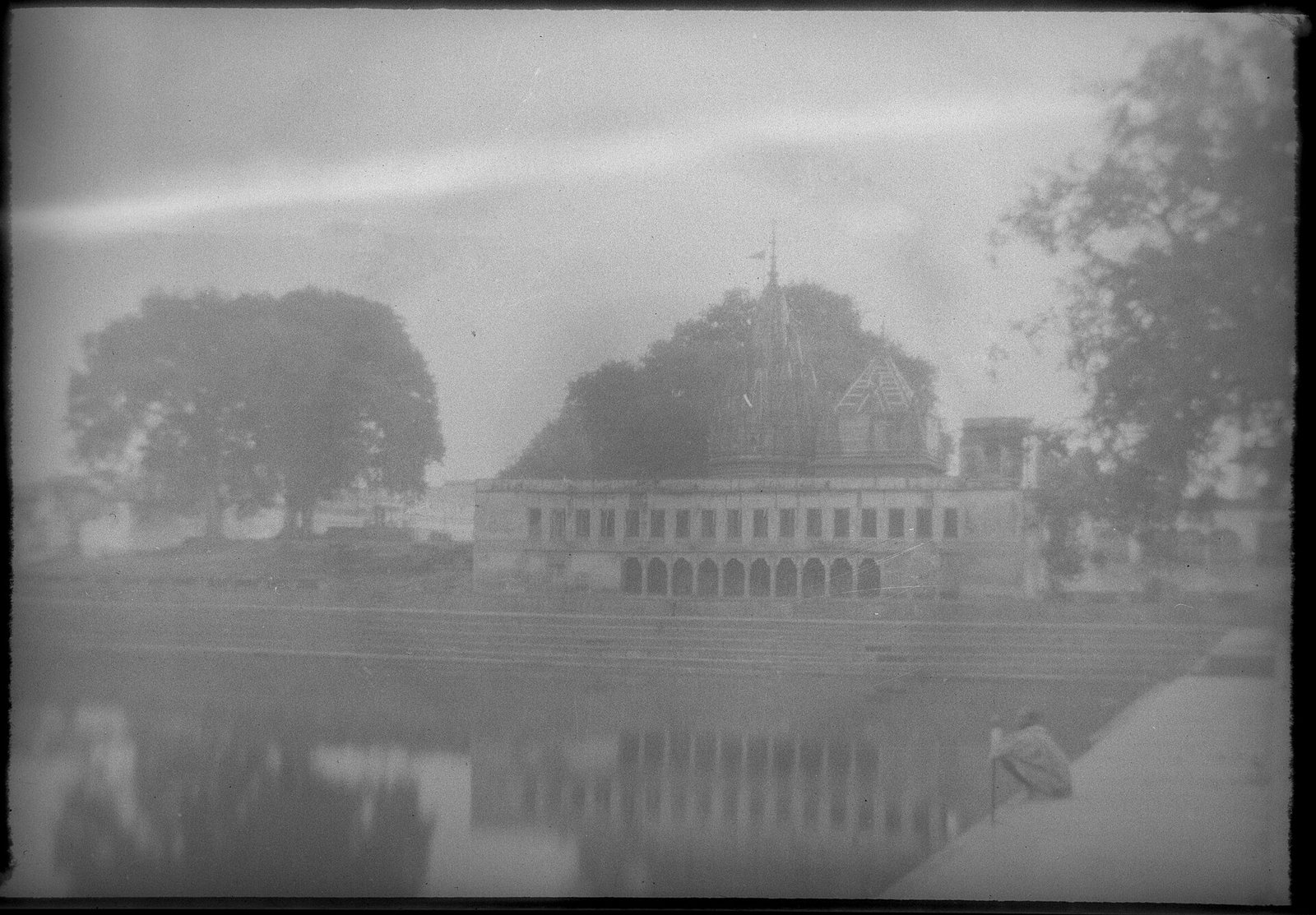
    Durga Kund temple, Varanasi
    Durga Kund — the 18th-century shikhara over its stepped kund — Photo: Creator:Agnes Morgenstierne · Public domain · via Wikimedia Commons
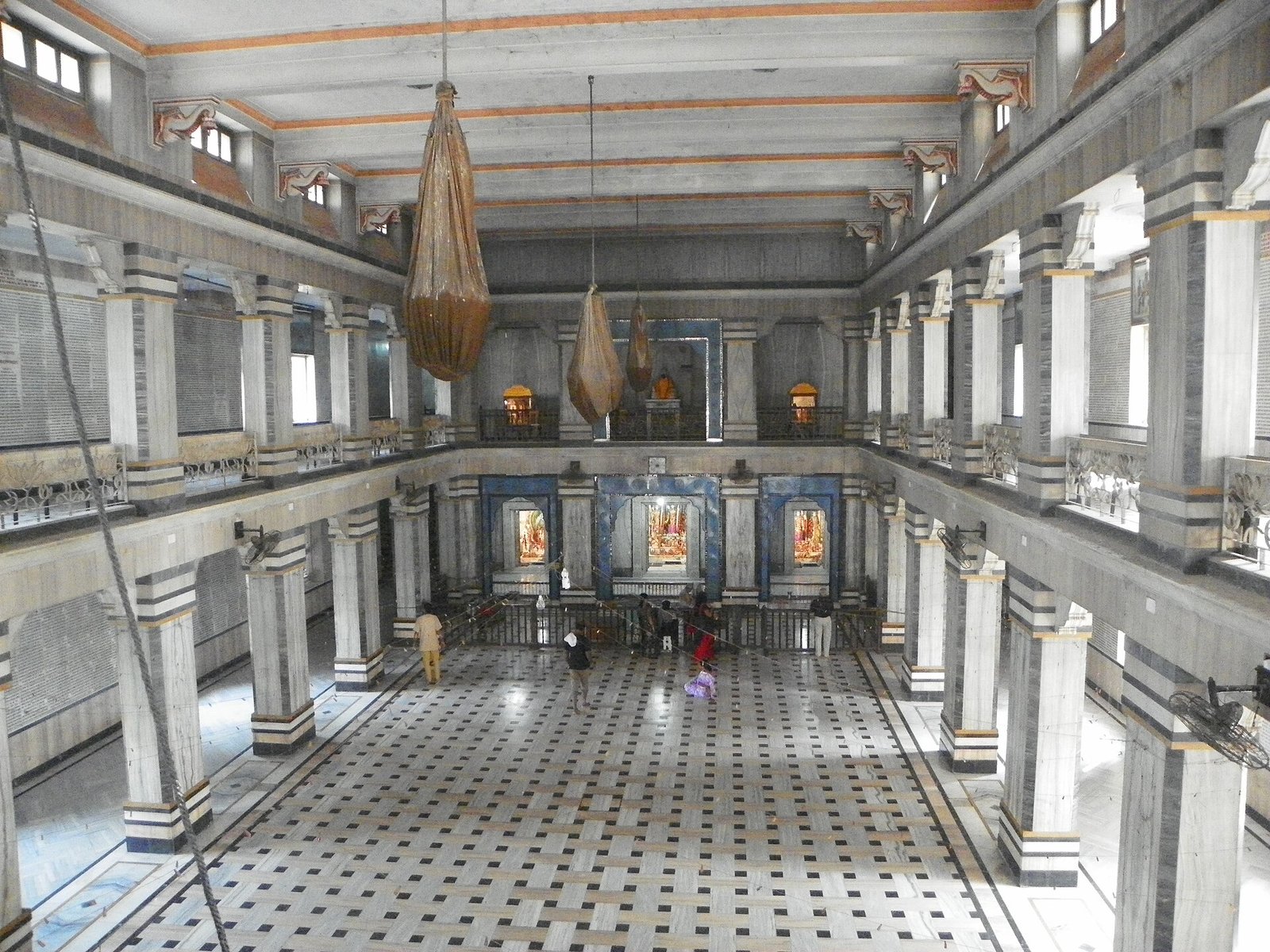
    Tulsi Manas Mandir, Varanasi
    Tulsi Manas Mandir — where the Ramcharitmanas lines the walls — Photo: juggadery · CC BY-SA 2.0 · via Wikimedia Commons
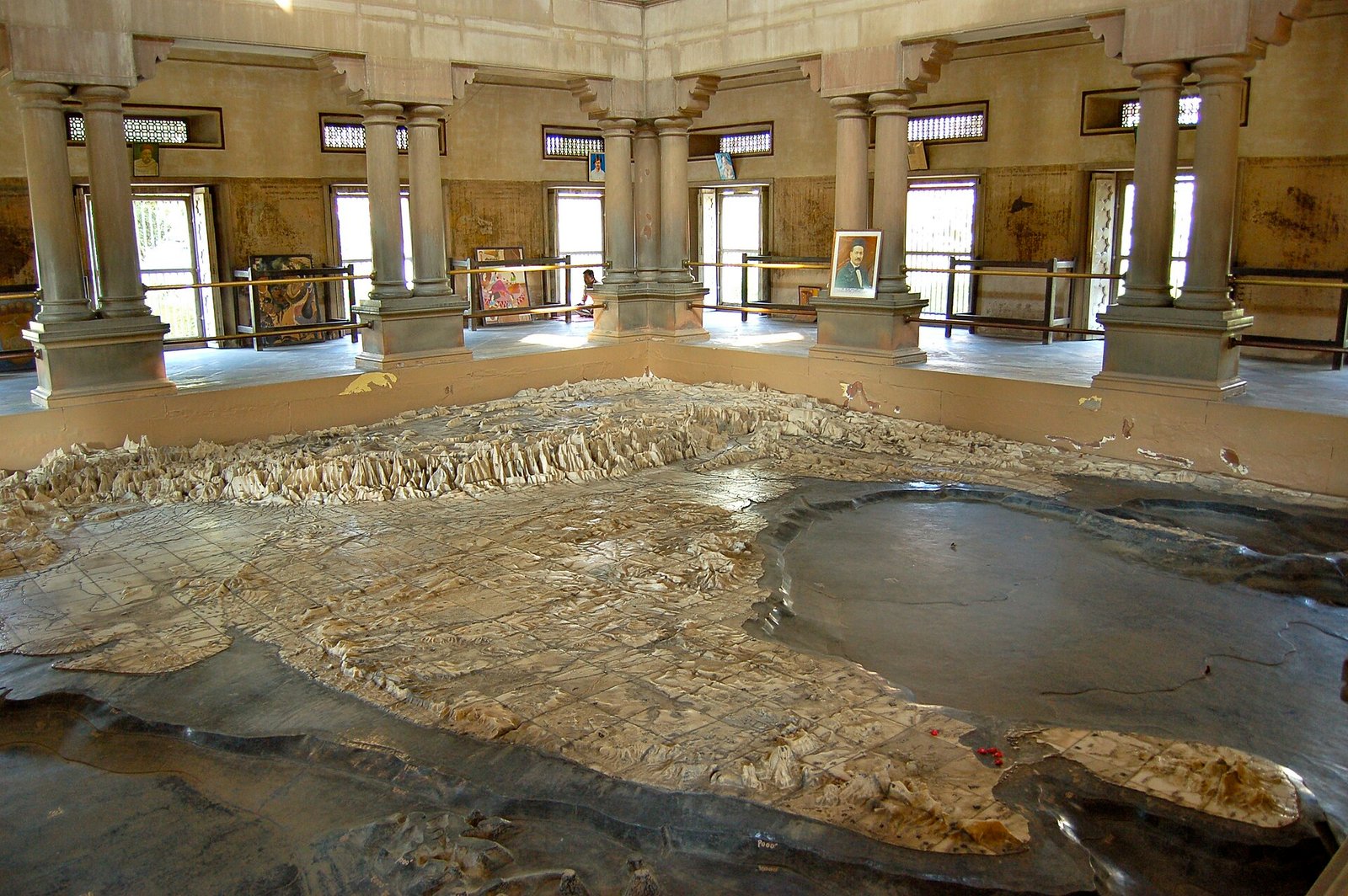
    Bharat Mata Mandir, Varanasi
    Bharat Mata Mandir — the temple whose deity is the map of India — Photo: Manuel Menal · CC BY-SA 2.0 · via Wikimedia Commons

    Follow the mapping in the Indic Gallery and read the architecture itself on the Temple Architecture Yatra.

    Credits: photographs via Wikimedia Commons under their stated licenses (per-image credits in captions); curation by Indic Warriors.